Ultimate 13 Beautiful Places: Undiscovered US Gems
Discover 13 beautiful, undiscovered places in the USA that offer solitude and breathtaking scenery away from the crowds. Your next adventure awaits!


13 Undiscovered Gems: Beautiful US Places You Need to See
13 Beautiful Places in the USA That Feel Undiscovered
Imagine standing on a windswept cliff overlooking a turquoise sea, with not another soul in sight. Or perhaps you envision a quiet, moss-draped forest trail, where the only sounds are the rustling of leaves and the distant call of a bird. While popular national parks and bustling cities draw millions of visitors each year, the United States is brimming with hidden gems – places of breathtaking beauty that remain remarkably undiscovered. These are the destinations that offer a sense of peace, solitude, and genuine connection with nature and local culture, far from the madding crowds. In a country often defined by its iconic landmarks, there's a profound joy in stumbling upon a place that feels like your own personal secret.
According to the National Park Service, attendance at the most popular parks like the Grand Canyon and Yosemite can reach millions of visitors annually, leading to congestion and a diminished sense of solitude. [1] This is precisely why seeking out these lesser-known, yet equally stunning, locations can offer a more profound and intimate travel experience. These aren't just pretty spots; they are places that evoke a sense of wonder and offer a chance to truly escape. From rugged coastlines to serene mountain valleys, from vibrant desert landscapes to lush, forgotten forests, the USA holds a treasure trove of beauty waiting to be explored by those willing to venture a little off the beaten path.
Let's embark on a journey to uncover 13 of these beautiful, often overlooked, destinations that promise an unforgettable escape.
1. Apostle Islands National Lakeshore, Wisconsin
Nestled along the northernmost tip of Wisconsin, jutting out into the vast expanse of Lake Superior, the Apostle Islands National Lakeshore is a collection of 21 islands and a 12-mile mainland strip that feels like a world apart. Often overshadowed by the more famous Great Lakes destinations, this archipelago offers a stunning blend of sandstone sea caves, pristine beaches, historic lighthouses, and dense forests. The dramatic cliffs, carved by centuries of wave action, create intricate arches, pillars, and caves that are accessible by kayak, boat tours, or for the truly adventurous, by swimming.
The islands are a haven for wildlife, with bald eagles soaring overhead and various species of waterfowl gracing the shores. Hiking trails wind through old-growth forests, leading to secluded campsites and panoramic views of the lake. In the winter, the sea caves transform into breathtaking ice formations, creating a magical, otherworldly landscape. The remoteness of the islands, coupled with the sheer scale of Lake Superior, contributes to the feeling of being in a truly wild and untamed place. It's a destination that rewards exploration, offering a profound sense of discovery with every paddle stroke and every step on its quiet trails. The National Park Service actively works to preserve the natural and cultural resources of the islands, ensuring their beauty remains for generations to come. [2]
2. Big Bend Ranch State Park, Texas
While Big Bend National Park garners most of the attention in West Texas, its neighbor, Big Bend Ranch State Park, offers an even wilder, more rugged, and less-trafficked experience. This is Texas at its most remote and untamed. Spanning over 300,000 acres along the Rio Grande, it is the largest state park in Texas. The landscape is a dramatic tapestry of towering mountains, deep canyons, desert plains, and the life-giving ribbon of the Rio Grande.
The park is a hiker's and backpacker's paradise, with challenging trails that lead to remote vistas and pristine desert environments. Opportunities for river trips on the Rio Grande are abundant, offering a unique perspective of the sheer canyon walls and the possibility of spotting diverse wildlife, including javelinas, deer, and a surprising array of bird species. The stargazing here is unparalleled, with minimal light pollution creating a celestial spectacle that is truly awe-inspiring. Big Bend Ranch State Park is not for the faint of heart; it demands preparation and a respect for its harsh yet beautiful environment, but the rewards are immense for those who seek true solitude and an authentic connection with the rugged Chihuahuan Desert. The park's vastness means that even on busy days, you can often find yourself completely alone.
3. North Cascades National Park, Washington
Often referred to as the "American Alps," North Cascades National Park in Washington State is a realm of jagged peaks, pristine glaciers, and impossibly blue alpine lakes. Despite its jaw-dropping beauty and accessibility from Seattle, it receives a fraction of the visitors compared to Olympic or Mount Rainier National Parks. This relative quietude allows for a more intimate experience with its dramatic wilderness.
The park is characterized by over 300 glaciers, more than any other park in the contiguous United States, feeding the vibrant turquoise waters of Diablo Lake and Ross Lake. Hiking trails range from easy lakeside strolls to strenuous climbs that reward with breathtaking panoramic views. The North Cascades Highway (State Route 20) offers stunning scenic drives, with numerous pull-offs and trailheads to explore. For those seeking true immersion, backcountry camping opportunities abound, allowing for nights under a sky thick with stars, far from any signs of civilization. The park's rugged terrain and wild character are a testament to its relatively undeveloped nature, making it a sanctuary for both wildlife and those seeking a profound escape into the mountains. The sheer scale and wildness of the North Cascades offer a sense of raw, untamed beauty that is increasingly rare.
4. Valley of Fire State Park, Nevada
Just an hour's drive from the glittering Strip of Las Vegas lies a landscape so alien and vibrant it feels like stepping onto another planet. Valley of Fire State Park is Nevada's oldest state park, and its name comes from the stunning formations of red sandstone that appear to be on fire when the sunlight hits them just right. These formations, sculpted over millions of years by erosion, create a surreal panorama of arches, canyons, and petroglyphs left by ancient Puebloans.
While many visitors make a quick drive-through, taking the time to explore the park's hiking trails reveals its true magic. Trails like the Fire Wave and White Domes offer opportunities to get up close and personal with the dramatic geology, leading through narrow canyons and to viewpoints overlooking the vast, colorful landscape. The vibrant colors – from deep crimson to pale pink and bright orange – are a photographer's dream. The park's relatively small size and proximity to Las Vegas might suggest it's always crowded, but by visiting during the shoulder seasons or early in the morning, you can often find yourself in quiet contemplation, surrounded by this geological wonderland. It’s a stark reminder that incredible natural beauty can exist in unexpected places, even close to major urban centers.
5. Isle Royale National Park, Michigan
Located in the vast, cold waters of Lake Superior, Isle Royale National Park is the least visited national park in the contiguous United States, and for good reason. Reaching this remote island wilderness requires a ferry or seaplane trip, a journey that filters out all but the most determined visitors. But for those who make the effort, the reward is an unparalleled experience of solitude and raw, natural beauty.
The park is a rugged island wilderness, characterized by dense forests, rocky shorelines, and a series of inland lakes. It's renowned for its population of wolves and moose, offering a unique chance to observe a natural predator-prey relationship in action. Hiking trails, including a significant portion of the famous Greenstone Ridge Trail, crisscross the island, leading to remote campgrounds and stunning overlooks. Kayaking and canoeing on the island's interior lakes or along its dramatic coastline offer a different perspective of its wild charm. The lack of modern development, the challenging access, and the sheer remoteness combine to create an atmosphere of profound peace and isolation. It’s a place where you can truly disconnect from the modern world and reconnect with the rhythms of nature. The National Park Service emphasizes the park's role as a living laboratory for ecological research, particularly concerning the wolf and moose populations. [3]

6. Craters of the Moon National Monument & Preserve, Idaho
Step onto a landscape that truly feels otherworldly at Craters of the Moon National Monument & Preserve in Idaho. This vast area preserves one of the most extensive and spectacular examples of volcanic features in the United States. The park showcases a chain of dormant volcanic cones, lava flows, and sagebrush steppe that stretch for miles. The stark, rugged beauty of the solidified lava fields, dotted with cinder cones and dramatic fissures, evokes a lunar landscape, hence its name.
Exploring Craters of the Moon is an adventure in itself. Hiking trails wind through lava tubes – underground tunnels formed by molten lava – offering a glimpse into the subterranean world. The Big Cinder Butte trail provides a challenging climb to the summit of a large cinder cone, offering panoramic views of the volcanic landscape. The park's remote location in central Idaho means it's often overlooked by travelers, preserving its sense of quiet and mystery. The stark beauty, the geological significance, and the feeling of stepping onto a different planet make Craters of the Moon a truly unique and undiscovered gem. The stark contrast between the dark lava rock and the bright blue Idaho sky is a visual spectacle.
7. Great Sand Dunes National Park and Preserve, Colorado
While Colorado is known for its majestic Rocky Mountains, Great Sand Dunes National Park and Preserve offers a landscape that is dramatically different and equally awe-inspiring. This park protects the tallest sand dunes in North America, rising up to 750 feet against the backdrop of the Sangre de Cristo Mountains. The sheer scale and surreal beauty of these shifting sands create a landscape that feels both ancient and ever-changing.
The experience here is unique. Visitors can hike on the dunes, try sandboarding or sand sledding down their steep faces, or simply marvel at the sheer magnitude of the formations. Medano Creek, which flows at the base of the dunes during late spring and early summer, offers a refreshing place to play and cool off. The contrast between the towering dunes, the flowing water, and the snow-capped mountains in the distance is a sight to behold. The park's remote location in southern Colorado contributes to its relatively low visitor numbers compared to other national parks, allowing for moments of quiet contemplation amidst this extraordinary landscape. The interplay of wind, sand, and water creates a dynamic environment that is constantly being reshaped.
8. Olympic Peninsula's Hoh Rainforest, Washington
While Olympic National Park is a well-known destination, the Hoh Rainforest within it remains one of the most enchanting and remarkably undiscovered feeling places in the contiguous United States. This temperate rainforest is a realm of towering trees draped in thick blankets of moss, ferns carpeting the forest floor, and an almost palpable sense of ancient magic. The sheer density of life and the muted, ethereal light create an atmosphere that is both peaceful and profoundly awe-inspiring.
Walking the Hall of Mosses or the Spruce Nature Trail feels like stepping into a fairy tale. Sunlight filters through the dense canopy, illuminating the vibrant greens and earthy browns of the forest. The silence here is profound, broken only by the drip of water from moss-laden branches or the distant call of a bird. While the park itself sees many visitors, the Hoh Rainforest, especially on a misty morning or during the quieter seasons, can offer a profound sense of solitude and immersion in a truly primeval environment. It’s a place that reminds you of the incredible power and beauty of nature, untouched and untamed. The unique ecosystem of the Hoh Rainforest is a testament to the high annual rainfall and mild temperatures of the region.
9. The Palouse, Washington and Idaho
The Palouse region, straddling southeastern Washington and north-central Idaho, is an agricultural landscape of rolling hills that, in certain seasons, transforms into a breathtaking panorama of undulating green and gold. This area, often overlooked by those seeking more dramatic natural landscapes, offers a unique and serene beauty defined by its softly sculpted topography.
During spring and early summer, the hills are carpeted in vibrant green wheat and peas, creating sweeping curves that seem to stretch endlessly. As the crops mature into late summer and fall, the landscape shifts to shades of gold and amber, bathed in the warm, golden light of the setting sun. The quiet country roads winding through the hills offer a peaceful driving experience, with numerous pull-offs for photographers to capture the stunning vistas. While not a "wild" landscape in the traditional sense, the Palouse offers a profound sense of peace and visual harmony. Its beauty lies in its simplicity, its vastness, and the gentle rhythm of agricultural life. It’s a place that invites slow travel and quiet appreciation, a true hidden gem for those who find beauty in the subtle artistry of the land.
10. Point Reyes National Seashore, California
Just north of San Francisco, Point Reyes National Seashore offers a dramatic and windswept coastline that feels worlds away from the bustling city. This rugged peninsula juts out into the Pacific Ocean, characterized by towering cliffs, expansive beaches, tule elk herds, and historic lighthouses. The constant presence of the ocean, the crashing waves, and the salty air create a powerful and invigorating atmosphere.
Despite its proximity to a major metropolitan area, Point Reyes retains a wild and remote feel. Hiking trails lead through coastal scrub, forests, and along dramatic cliff edges, offering opportunities to spot whales during migration seasons, seals, sea lions, and the park's iconic tule elk. The historic Point Reyes Lighthouse, perched precariously on the edge of a cliff, is a testament to the area's maritime history and offers stunning ocean views. The sheer remoteness of some of its beaches and the often-foggy weather contribute to its sense of being a place apart, a wild edge where the land meets the vast Pacific. It’s a sanctuary for both wildlife and those seeking a powerful connection with the raw beauty of the California coast. The National Park Service manages this area, preserving its natural and historical significance. [4]
11. The Black Canyon of the Gunnison National Park, Colorado
While Colorado boasts many famous mountain ranges, the Black Canyon of the Gunnison National Park offers a different kind of dramatic beauty – a deep, narrow gorge carved by the Gunnison River. The canyon's name comes from the fact that its steep, sheer walls are so dark and narrow that the sun only reaches the bottom for a short period each day, casting it into shadow for much of the year. This gives the canyon a mysterious and dramatic aura.
The park offers two distinct areas to explore: the South Rim and the North Rim. The South Rim is more accessible, with a scenic drive and several overlooks offering breathtaking views of the canyon's depths. Hiking trails, including the strenuous Rim Rock Trail, provide opportunities to experience the canyon from different perspectives. The North Rim is more remote and offers a quieter, more primitive experience. For the truly adventurous, the park offers challenging routes to the canyon floor, but these require significant preparation and backcountry experience. The sheer drop-offs, the powerful river below, and the dramatic geological formations create a sense of awe and wonder that is both humbling and exhilarating. Its relative obscurity compared to other national parks makes it a perfect destination for those seeking dramatic landscapes without the crowds.
12. Congaree National Park, South Carolina
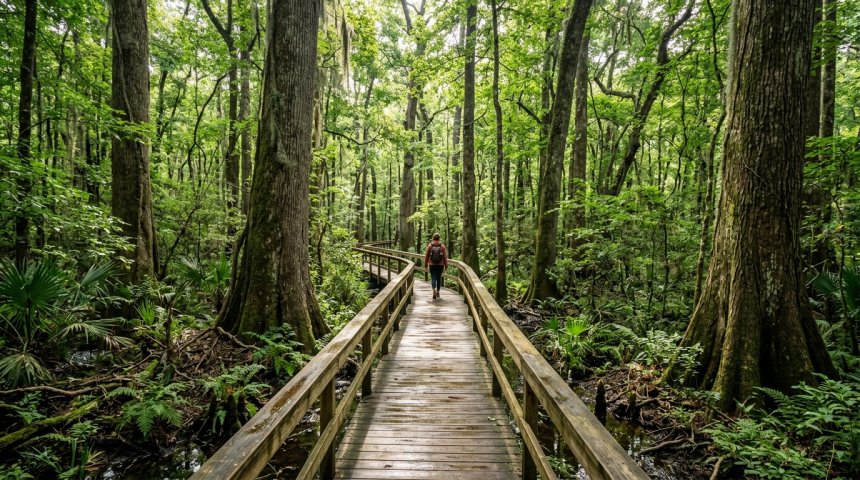
Deep in the heart of South Carolina lies Congaree National Park, home to the largest intact expanse of old-growth bottomland hardwood forest in the southeastern United States. This unique ecosystem is a world of towering trees, including some of the tallest loblolly pines, bald cypress, and water tupelo in the nation. The park is a floodplain, and its character is shaped by the rise and fall of the Congaree River.
The park offers a network of boardwalks that wind through the towering trees, allowing visitors to explore the forest canopy and experience its unique ecosystem without disturbing the delicate environment. Hiking trails also meander through the woods, offering opportunities to encounter diverse wildlife, including deer, wild turkeys, and a remarkable variety of birds and insects. The sheer scale of the old-growth trees, combined with the lush, humid atmosphere and the sounds of the forest, creates an immersive and almost primeval experience. Congaree is a place of quiet majesty, a vital sanctuary for biodiversity, and a testament to the enduring power of nature. Its relative lack of fame makes it a perfect escape for those seeking a peaceful immersion in one of America's most unique forest ecosystems.
13. Grand Teton National Park - Less Traveled Areas, Wyoming
While Grand Teton National Park is undeniably famous, its sheer size and varied landscape mean that many of its most beautiful and tranquil areas remain relatively undiscovered by the masses. Beyond the iconic viewpoints of Oxbow Bend and Mormon Row, there are vast stretches of wilderness, hidden lakes, and less-trafficked trails that offer a profound sense of solitude and natural beauty.
Consider exploring the Phelps Lake Overlook trail, which offers stunning views without the intense crowds of Jenny Lake. Or venture into the less-visited northern areas of the park, where the Teton Range still dominates the skyline but with fewer people sharing the experience. Kayaking or canoeing on the Snake River away from the main boat launches can provide serene moments surrounded by the majestic peaks. The expansive valley floor, dotted with sagebrush and bisected by the winding Snake River, offers a different kind of beauty than the jagged peaks, and it's often less crowded. By venturing a little further from the main attractions or visiting during the shoulder seasons, you can still find those moments of quiet awe that make the Tetons so special, but with a precious sense of having them almost to yourself. The sheer scale of the park means that even popular areas, if you explore just a little off the main paths, can feel like your own private slice of paradise.
Conclusion
The United States is a land of immense geographical diversity, offering a wealth of breathtaking landscapes that often go unnoticed. While the popular attractions deserve their acclaim, there is a special kind of magic in discovering places that feel untouched, serene, and uniquely yours. These 13 destinations – from the sea caves of the Apostle Islands to the volcanic fields of Craters of the Moon, from the ancient forests of Congaree to the dramatic canyons of the Black Canyon – offer a chance to escape the crowds, reconnect with nature, and experience the profound beauty that lies just beyond the well-trodden path.
Seeking out these "undiscovered" places isn't about finding empty spaces; it's about finding spaces where the natural world can speak a little louder, where the silence is more profound, and where the sense of wonder is amplified by the absence of overwhelming human presence. Whether you're an avid hiker, a nature photographer, or simply someone seeking a moment of peace, these beautiful corners of America offer an invitation to explore, to discover, and to be utterly captivated by the quiet, enduring beauty of the land. The adventure of finding these places is as rewarding as the destination itself, promising memories that resonate long after you've returned home.
Frequently Asked Questions
What makes a place feel "undiscovered"?
A place feels "undiscovered" when it offers a sense of solitude, peace, and a lack of overwhelming crowds, even if it is technically known or accessible. This can be due to its remote location, challenging access, less-developed infrastructure, or simply being overshadowed by more famous nearby attractions. The feeling is subjective and often relates to the visitor's ability to have an intimate and personal experience with the natural environment or local culture without significant human interference.
Are these places safe to visit?
These places are generally safe to visit, but like any travel, preparation and awareness are key. Many of these destinations are in remote or wilderness areas, so it's crucial to check weather conditions, trail statuses, and any specific park regulations before visiting. Inform someone of your travel plans, carry appropriate gear, and be mindful of wildlife. For areas like Big Bend Ranch State Park or the Black Canyon of the Gunnison, which have more challenging terrain, proper hiking experience and equipment are essential. Always prioritize safety and respect the natural environment.
How can I find more "undiscovered" places in the USA?
To find more "undiscovered" places, consider exploring areas that are not designated national parks but are state parks, national forests, or Bureau of Land Management (BLM) lands, which often receive fewer visitors. Look for destinations that require a bit more effort to reach, such as those involving longer drives, ferry trips, or multi-day hikes. Local tourism websites, outdoor recreation blogs, and forums can also be great resources. Sometimes, simply driving off the main highway in scenic regions can lead to unexpected and beautiful discoveries.
What kind of activities can I do in these lesser-known locations?
The activities available will vary greatly depending on the specific location, but generally, these places offer opportunities for hiking, backpacking, camping, wildlife viewing, photography, kayaking, canoeing, stargazing, and simply enjoying the peace and quiet of nature. In coastal areas, activities might include beachcombing and tide pooling, while mountainous regions offer more challenging climbs and scenic drives. Many of these locations are ideal for activities that allow for deep immersion in nature and a break from digital distractions.
Do these places require special permits or reservations?
Some of the more remote or popular backcountry areas within these locations might require permits for camping or specific activities, especially in national parks or highly regulated areas. It's always advisable to check the official website of the specific park or land management agency (e.g., National Park Service, State Parks Department, U.S. Forest Service) for the most up-to-date information on permits, reservations, fees, and any alerts or closures before planning your trip. For instance, backcountry camping in Isle Royale National Park requires advance reservations.
How can I travel responsibly in these natural areas?
Traveling responsibly involves minimizing your impact on the natural environment. This includes following Leave No Trace principles: pack out everything you pack in, stay on designated trails, do not feed wildlife, respect wildlife from a distance, and leave natural objects as you find them. Be mindful of noise levels, especially in quiet areas. Support local businesses when possible, and be respectful of any local communities or cultural sites you encounter. Understanding and adhering to park rules and regulations is crucial for preserving these beautiful places for future generations.
Citations:
1] National Park Service. (n.d.). Park Statistics. Retrieved from [https://www.nps.gov/aboutus/visitation-statistics.htm (Note: Specific year statistics vary, general link provided)
Share
What's Your Reaction?
 Like
0
Like
0
 Dislike
0
Dislike
0
 Love
0
Love
0
 Funny
0
Funny
0
 Angry
0
Angry
0
 Sad
0
Sad
0
 Wow
0
Wow
0