Ultimate Congaree National Park: Explore South Carolina's Old-Growth Forest 2026
Discover Congaree National Park, South Carolina, home to the largest old-growth bottomland hardwood forest in the Southeast. Plan your visit to this timeless wilderness in 2026.

Did you know that Congaree National Park in South Carolina protects the largest tract of old-growth bottomland hardwood forest remaining in the southeastern United States? This astonishing statistic underscores the immense ecological significance of this relatively young national park, established in 2003. Within its protected boundaries lies a landscape shaped by the powerful forces of water and time, a vibrant ecosystem teeming with life, and a testament to the enduring power of nature. Congaree is not just a park; it's a living museum, a sanctuary for biodiversity, and a place where visitors can step back in time, experiencing a wilderness that has largely vanished from much of the modern world.
The park's story is one of preservation and resilience. For centuries, these magnificent forests stood tall, their towering trees a silent witness to the ebb and flow of the Congaree and Wateree Rivers. The encroaching tide of industrialization and logging threatened to decimate these ancient woodlands, but a dedicated movement of conservationists, scientists, and citizens fought to protect this irreplaceable natural treasure. Their efforts culminated in the designation of Congaree as a National Park, ensuring its survival for generations to come. Today, Congaree offers a unique opportunity to explore a world of towering trees, diverse wildlife, and a profound sense of tranquility, a stark contrast to the hustle and bustle of daily life.
This article will delve deep into the heart of Congaree National Park, exploring its rich natural history, its ecological importance, the diverse flora and fauna that call it home, and the myriad of activities available for visitors. We will navigate the winding waterways, traverse the ancient forest floor, and uncover the secrets of this remarkable wilderness. Whether you are an avid outdoors enthusiast, a nature lover, or simply seeking a peaceful escape, Congaree National Park promises an unforgettable experience, a journey into a land where nature reigns supreme.
The Ancient Heart of the Southeast: Understanding Congaree's Old-Growth Forest
The designation "old-growth" is not merely a descriptive term; it signifies a forest that has achieved a state of maturity, characterized by large, old trees, a complex structure of multiple canopy layers, and a rich diversity of plant and animal life. Congaree National Park is a pristine example of this rare and vital ecosystem, specifically a bottomland hardwood forest. This type of forest thrives in the floodplains of rivers, areas that experience periodic inundancy. The dynamic interplay of water and land creates a unique environment that supports species adapted to both wet and dry conditions.
The sheer scale of Congaree's old-growth forest is awe-inspiring. Here, trees like the water tupelo (Nyssa aquatica) and bald cypress (Taxodium distichum) can reach staggering heights, often exceeding 100 feet, with impressive girths that speak to centuries of growth. These giants form a dense canopy that filters sunlight, creating a dappled, often humid environment on the forest floor. Beneath this towering ceiling, a complex understory of smaller trees, shrubs, and herbaceous plants competes for light, contributing to the forest's intricate structure.
The ecological significance of old-growth bottomland hardwood forests cannot be overstated. They are critical habitats for a vast array of species, many of which are specialized and dependent on the unique conditions these forests provide. These include numerous bird species that nest and forage in the high canopy, amphibians and reptiles that thrive in the moist undergrowth and ephemeral pools, and countless invertebrates that play vital roles in nutrient cycling. The ancient trees themselves are crucial, providing food sources through their fruits and seeds, as well as habitat through their hollows and decaying wood.
Furthermore, these forests act as natural sponges, absorbing floodwaters from the Congaree and Wateree Rivers. This ability to regulate water flow is crucial for maintaining downstream water quality and mitigating the impact of floods. The complex root systems of the trees help to stabilize the soil, preventing erosion, while the decaying organic matter contributes to the rich, fertile soil of the floodplain.
The preservation of Congaree's old-growth forest is a testament to the foresight and dedication of those who recognized its intrinsic value. Unlike much of the Southeast, which was extensively logged for timber during the 19th and 20th centuries, these specific lands were spared, largely due to their periodic inundation, which made logging operations difficult and less profitable. This fortunate circumstance allowed these ancient trees to continue their slow, majestic growth, creating a living legacy of a forest type that has all but disappeared.
The park's commitment to maintaining this old-growth character involves careful management practices. While natural processes like flooding and tree fall are allowed to shape the forest, human interventions are minimized to preserve the natural dynamics. This hands-off approach allows the forest to evolve and adapt, ensuring its continued health and resilience for future generations. Visitors to Congaree can walk amongst these giants, feeling a profound connection to a past that is still very much alive, a living testament to the power and beauty of an ancient, undisturbed wilderness. The sheer presence of these massive trees, some estimated to be over 1,000 years old, offers a humbling perspective on the passage of time and the enduring strength of nature.
The Rhythms of the River: Water's Influence on Congaree's Ecosystem
Water is the lifeblood of Congaree National Park. The park's very existence and its unique ecological character are inextricably linked to the Congaree and Wateree Rivers, which define its boundaries and dictate its ecological processes. These rivers, with their seasonal fluctuations in water levels, create a dynamic environment that is both a source of life and a force of change. Understanding the hydrological cycle of the Congaree floodplain is key to appreciating the park's biodiversity and its ecological significance.
The dominant hydrological feature of the park is its floodplain. This is a relatively flat area adjacent to the rivers that is subject to periodic flooding. During periods of heavy rainfall or snowmelt upstream, the rivers can swell and overflow their banks, inundating the surrounding forests. These floods are not destructive events; rather, they are integral to the health and functioning of the bottomland hardwood ecosystem.
When the rivers flood, a rich layer of nutrient-laden sediment is deposited onto the forest floor. This alluvial soil is highly fertile, providing the essential nutrients that support the growth of the park's magnificent trees and diverse plant life. The water also provides a vital source of moisture, particularly during drier periods, sustaining the lush vegetation that characterizes the park.
The frequency and duration of these floods vary. Some areas of the park experience inundation for extended periods, while others are flooded less often or for shorter durations. This variation in hydrological conditions creates a mosaic of microhabitats within the park, each supporting a slightly different array of plant and animal species. For example, areas that are frequently flooded are dominated by species like bald cypress and water tupelo, which are highly adapted to waterlogged conditions. In contrast, areas that flood less often may support species like oaks (Quercus spp.) and hickories (Carya spp.).

The floodwaters also play a crucial role in seed dispersal. Many of the plant species in Congaree rely on the moving water to carry their seeds to new locations, facilitating the regeneration and expansion of the forest. Similarly, the ephemeral pools and backwaters created by floods provide critical breeding grounds for amphibians like frogs and salamanders, as well as habitat for fish and other aquatic organisms.
Beyond the immediate impact of flooding, the rivers also influence the park's overall climate and humidity. The large bodies of water contribute to higher humidity levels, creating a microclimate that supports a rich diversity of plant and animal life, including many species that are at the southern edge of their range.
The park's trail system is designed to allow visitors to experience this dynamic relationship with the rivers. The Boardwalk Trail, a signature feature of Congaree, is elevated above the often-saturated ground, allowing access even during and immediately after flood events. This allows visitors to witness the forest in its wettest state, providing a unique perspective on the ecosystem's resilience. Other trails may be accessible only during drier periods, highlighting the seasonal nature of the park's landscape.
The health of the Congaree and Wateree Rivers is therefore paramount to the health of the park. Upstream land use practices, water quality, and flow regimes all have an impact on the park's ecosystem. The National Park Service works to monitor these factors and to advocate for the protection of the rivers that sustain this invaluable natural resource. Congaree National Park is a living laboratory, demonstrating the profound and essential role that water plays in shaping and sustaining one of the most unique and vital ecosystems in the southeastern United States. The constant ebb and flow, the quiet stillness of a flooded forest, and the vibrant life that thrives within these watery rhythms all contribute to the profound sense of wildness that defines Congaree.
A Tapestry of Life: Flora and Fauna of Congaree National Park
Congaree National Park is a biodiversity hotspot, a vibrant tapestry woven from an astonishing array of plant and animal life. The unique conditions of the old-growth bottomland hardwood forest, shaped by the powerful influence of the Congaree and Wateree Rivers, create a habitat that supports a remarkable diversity of species, many of which are rare or declining in other parts of the Southeast.
Flora: The Towering Giants and Delicate Undergrowth
The most striking botanical feature of Congaree is, of course, its old-growth trees. As mentioned earlier, species like the water tupelo and bald cypress dominate the landscape, reaching impressive heights and ages. These "champion" trees are not just impressive in size but also in their ecological role, providing food and shelter for countless organisms. Other significant tree species include various oaks (such as water oak, cherrybark oak, and swamp chestnut oak), pines (like loblolly pine), red maple, and sweet gum.
The understory of the forest is equally rich, though often less visible beneath the dense canopy. Here, one can find a variety of shrubs and smaller trees, including American hornbeam, swamp dogwood, and red-bud. In the more open areas and along the edges of water bodies, buttonbush and river birch are common.
The forest floor itself is a complex ecosystem. During wetter periods, the ground can be covered with water, supporting aquatic vegetation. As the water recedes, a diverse array of herbaceous plants emerges, including various ferns, wildflowers, and grasses. During the spring, the forest floor can be carpeted with ephemeral wildflowers, adding a splash of color to the otherwise green and brown landscape. Some notable wildflower species include Trillium, Jack-in-the-pulpit, and mayapple.
The park also hosts a significant number of epiphytes, plants that grow on other plants for physical support rather than as parasites. Spanish moss, while often associated with the South, is not as prevalent in the drier interior of the forest but can be found in damper areas, draping elegantly from tree branches.
Fauna: A Haven for Wildlife
Congaree's diverse habitats, from the flooded forests to the drier uplands and the riverine environments, support a rich and varied animal population.
Mammals: While large mammals like black bears and white-tailed deer are present, they are often elusive. Visitors are more likely to encounter smaller mammals such as raccoons, opossums, squirrels (including the common gray squirrel and the fox squirrel), and various rodents. The park is also home to several species of bats, which play a vital role in insect control.
Birds: Congaree is a paradise for birdwatchers. The dense forest canopy provides nesting and foraging opportunities for a multitude of avian species. Woodpeckers are abundant, with several species like the pileated woodpecker and red-headed woodpecker being common sights. Wood ducks are frequently seen in the park's waterways, along with other waterfowl. The park's extensive forest also provides critical habitat for migratory songbirds, including various warblers, vireos, and flycatchers. Raptors such as red-tailed hawks and ospreys can also be spotted soaring overhead. The park is also known for its population of barred owls, whose distinctive calls echo through the forest at night.
Reptiles and Amphibians: The wet environment of Congaree is ideal for a wide range of reptiles and amphibians. Frogs and toads are abundant, their calls creating a chorus, especially during the spring and summer months. Various salamander species, including the rare red-spotted newt, thrive in the moist conditions. Snakes, both venomous and non-venomous, are also present, including the cottonmouth, copperhead, black rat snake, and garter snake. Turtles are commonly seen basking on logs in the park's waterways.
Insects and Invertebrates: The park's insect life is incredibly diverse and plays a crucial role in the ecosystem. Butterflies and moths are abundant, attracted to the flowering plants. Dragonflies and damselflies flit over the water. The forest floor and decaying wood teem with beetles, ants, and other invertebrates. Congaree is also known for its population of fireflies, which put on a spectacular display during the warmer months, with some species exhibiting synchronized flashing.
The park's conservation efforts are vital for maintaining this rich biodiversity. By protecting the old-growth forest and the integrity of the river systems, Congaree National Park ensures that these species have the habitat they need to survive and thrive. For visitors, observing this intricate web of life is one of the most rewarding aspects of exploring Congaree, offering a glimpse into a healthy, functioning ecosystem.
Exploring Congaree: Activities and Adventures in the Wilderness
Congaree National Park offers a variety of ways for visitors to immerse themselves in its unique wilderness. Whether you prefer a leisurely stroll, a challenging paddle, or a night under the stars, the park provides opportunities for adventure and discovery.
Hiking Trails: Connecting with the Forest Floor
The park boasts a network of hiking trails, catering to different fitness levels and interests.
-
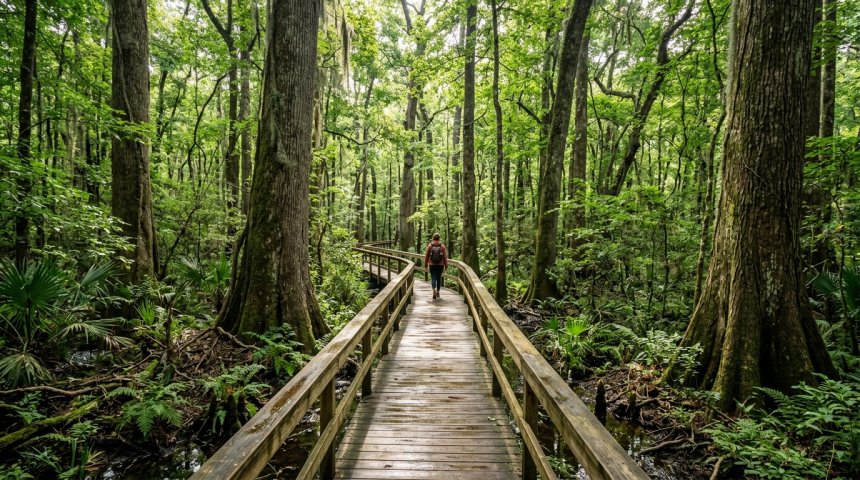
Boardwalk Trail: This is the most iconic trail in Congaree, a 2.4-mile loop that is elevated above the forest floor. Constructed primarily of boardwalk, it allows visitors to explore the heart of the old-growth forest without disturbing the delicate ecosystem or getting their feet wet. The Boardwalk Trail is accessible year-round and provides stunning views of the towering trees, especially during and after flood events when the forest floor can be submerged. Interpretive signs along the way provide information about the park's natural and cultural history. This trail is a must-do for any visitor.
-
Elevated Boardwalk Spur Trail: For those seeking a shorter experience, a 0.6-mile spur trail branches off the main Boardwalk Trail, offering a more concise glimpse into the old-growth forest.
-
River Trail: This 2.4-mile trail follows the Congaree River, offering different perspectives of the park's waterways and forests. It can be muddy and is best explored during drier periods. The trail provides opportunities to observe riverine wildlife and enjoy the sounds of the flowing water.
-
Weston Lake Loop Trail: A longer, more strenuous option at 4.4 miles, this trail circles Weston Lake, a large oxbow lake formed by the Congaree River. The trail passes through diverse forest types and offers opportunities for birdwatching and observing aquatic life. Portions of this trail can be flooded and impassable during high water periods.
-
Oak Ridge Trail: This 3.4-mile trail traverses a slightly higher ridge within the park, offering a different forest experience. It can be a good option when other trails are flooded.
-
Kingsley Trail: This is the longest trail in the park, a challenging 11.6-mile loop that takes hikers deep into the backcountry. It is recommended for experienced hikers and those looking for a more remote wilderness experience. This trail is often less maintained and can be difficult to navigate in certain sections.
Paddling: Navigating the Waterways
For a truly immersive experience, exploring Congaree's waterways by canoe or kayak is highly recommended. The park offers opportunities to paddle through the flooded forest, providing a unique perspective on the ecosystem.
-
Canoe Trail: This marked route allows paddlers to navigate through the park's intricate network of creeks and sloughs. It is particularly spectacular during spring floods when much of the forest floor is submerged, creating a "water-world" environment. Paddlers can explore at their own pace, observing wildlife and enjoying the tranquility of the flooded forest.
-
Guided Paddles: The park often offers ranger-led paddling tours, which are an excellent way for visitors to learn about the park's ecology and history from an expert. These tours provide valuable insights and ensure a safe and informative experience.
-
Access Points: Several access points are available for launching canoes and kayaks, including the River Trail access and various points along the park's main road.
Camping: Spending a Night in the Wilderness
Congaree offers primitive backcountry camping for those who wish to extend their stay and experience the park after dark.
-
Backcountry Campsites: Designated campsites are available throughout the park, often located along the longer hiking trails. These sites are primitive, meaning they have no amenities like restrooms or running water. Campers must be self-sufficient and pack out everything they pack in. Reservations are required and can be made through the park's reservation system.
-
Backcountry Regulations: Strict regulations are in place to protect the park's environment. Campers must follow Leave No Trace principles, use established fire rings (where permitted), and store food properly to avoid attracting wildlife.
Ranger Programs and Educational Opportunities
Congaree National Park is committed to providing educational experiences for its visitors.
-
Ranger-Led Walks and Talks: Throughout the year, park rangers lead guided walks, campfire talks, and interpretive programs. These programs offer valuable insights into the park's natural history, ecology, and cultural heritage. They are an excellent way to deepen your understanding and appreciation of Congaree.
-
Visitor Center: The Harry L. Rickenbaker Visitor Center provides exhibits, information, and a bookstore. It's a great place to start your visit, get maps, and learn about current conditions and programs.
Stargazing: A Celestial Spectacle
Away from the light pollution of urban areas, Congaree National Park offers exceptional opportunities for stargazing. On clear nights, the sky comes alive with stars, planets, and the Milky Way. The park occasionally hosts special stargazing events, but visitors can also simply find a quiet spot and enjoy the celestial display.
Photography: Capturing the Beauty
Congaree is a photographer's dream, offering endless opportunities to capture the beauty of the old-growth forest, the intricate details of plants and wildlife, and the dramatic landscapes shaped by the rivers. Sunrise and sunset can cast a magical light through the trees, and the mist that often hangs over the water in the early morning adds an ethereal quality to the scenes.
Whether you're seeking a strenuous hike, a peaceful paddle, or a quiet moment of reflection, Congaree National Park provides a profound connection to a timeless wilderness. It's a place where the rhythms of nature are paramount, and visitors are invited to slow down, observe, and appreciate the enduring power of the natural world.
Conservation and Management: Protecting Congaree's Legacy
The designation of Congaree as a National Park in 2003 was a significant victory for conservation, but the work of protecting this irreplaceable ecosystem is ongoing. The park's management strategies are focused on preserving its unique old-growth bottomland hardwood forest, maintaining the health of the Congaree and Wateree Rivers, and protecting its rich biodiversity.
The Importance of Old-Growth Preservation
The primary management goal for Congaree is the preservation of its old-growth forest. This involves minimizing human impact and allowing natural processes to shape the forest. Unlike many managed forests, Congaree is not actively logged or extensively thinned. Instead, park managers rely on natural disturbances, such as tree falls caused by wind or lightning, to create gaps in the canopy that allow for the regeneration of new trees. This approach mimics the natural dynamics of an old-growth forest, ensuring its long-term health and resilience.
The park also monitors the health of its trees, looking for signs of disease or stress that could threaten the old-growth stands. While invasive species are a concern, the park's relatively isolated location and the challenging flood conditions have, to some extent, limited their establishment compared to other natural areas. However, ongoing monitoring and control efforts are crucial.
River Management and Floodplain Integrity
The Congaree and Wateree Rivers are vital to the park's ecosystem, and their health is a key management concern. The park works in collaboration with other agencies and stakeholders to ensure the rivers' water quality and flow regimes are maintained. This includes monitoring for pollution and advocating for practices that protect the integrity of the floodplain.
The periodic flooding that defines Congaree is a critical ecological process. Park management aims to ensure that natural flood patterns are not unduly disrupted by upstream development or water control structures. The ability of the rivers to flood the forest floor is essential for depositing nutrient-rich sediments, replenishing soil fertility, and providing habitat for a wide range of species.
Biodiversity Monitoring and Research
Congaree National Park is a living laboratory, and research plays a crucial role in its management. Scientists and park staff conduct ongoing monitoring of the park's flora and fauna to track population trends, assess habitat health, and identify any emerging threats. This research informs management decisions and helps to ensure that conservation efforts are effective.
The park is particularly interested in studying the unique adaptations of species that thrive in the bottomland hardwood environment. This includes research on amphibians and reptiles that rely on ephemeral pools, birds that utilize the dense canopy, and the complex interactions between trees, fungi, and other organisms in the forest ecosystem.
Visitor Use and Education
Balancing visitor access with the need to protect the park's resources is a constant challenge. Congaree's management plan aims to provide opportunities for visitors to experience the park while minimizing their impact. The elevated Boardwalk Trail, for example, was designed to allow access to the sensitive old-growth forest without causing damage.
Educational programs and interpretive materials are key components of visitor management. By educating visitors about the park's ecological significance and the importance of conservation, Congaree hopes to foster a sense of stewardship and encourage responsible behavior. The park's visitor center and ranger-led programs play a vital role in this educational mission.
Partnerships and Collaboration
Effective conservation often requires collaboration. Congaree National Park works with a variety of partners, including other federal and state agencies, academic institutions, and non-profit organizations. These partnerships are essential for conducting research, sharing resources, and advocating for the protection of the park and its surrounding watershed.
The legacy of Congaree National Park is one of successful conservation, a testament to the power of dedicated efforts to protect a vital natural resource. The ongoing commitment to preserving its old-growth forests and dynamic river systems ensures that this remarkable wilderness will continue to thrive for generations to come, offering a glimpse into a world that has all but vanished elsewhere.
Planning Your Visit to Congaree National Park
A visit to Congaree National Park can be a deeply rewarding experience, offering a chance to connect with one of the most unique and ecologically significant natural areas in the United States. To make the most of your trip, a little planning goes a long way.
When to Visit
Congaree experiences distinct seasons, each offering a different experience:
- Spring (March-May): This is a popular time to visit, with mild temperatures and the forest coming alive with new growth. Wildflowers bloom, and bird activity is high. This is also the season when the park is most likely to experience significant flooding, which can make some trails impassable but offers a spectacular view of the flooded forest for paddlers and those on the Boardwalk.
- Summer (June-August): Summers in Congaree are hot and humid, with frequent thunderstorms. While this can be challenging for hiking, the lush greenery is at its peak, and insect life is abundant. Paddling can be a refreshing way to experience the park during these months.
- Fall (September-November): Fall offers a welcome respite from the summer heat with cooler temperatures and lower humidity. The park is generally drier, making more trails accessible. Fall colors, while not as dramatic as in mountainous regions, can still be beautiful, with the changing hues of the leaves.
- Winter (December-February): Winters are generally mild, with occasional frost. This is a quieter time to visit, offering excellent opportunities for wildlife viewing and enjoying the stark beauty of the bare trees. The park is typically dry and offers the best conditions for exploring all trails.
Getting There
Congaree National Park is located near Columbia, South Carolina. The most common way to access the park is by car.
- From Columbia, SC: Take I-77 South to Exit 91 (SC-302 East). Follow SC-302 East for approximately 6 miles to Garners Ferry Road (US-378 East). Turn left onto Garners Ferry Road and continue for about 3 miles to the park entrance.
Park Entrance and Fees
Congaree National Park is free to enter. There are no entrance fees required. The park is open year-round, from dawn to dusk. The visitor center has specific operating hours, which can vary by season, so it's advisable to check the park's official website for the most up-to-date information.
Visitor Center
The Harry L. Rickenbaker Visitor Center is the main hub for information. Here, you can:
- Obtain park maps and brochures.
- Learn about current trail conditions and any closures.
- View exhibits on the park's natural and cultural history.
- Purchase souvenirs and books at the park store.
- Talk to park rangers for recommendations and information.
What to Bring
- Insect Repellent: Mosquitoes and other biting insects can be prevalent, especially during warmer months and near water.
- Water: Staying hydrated is crucial, especially during hot weather. Carry plenty of water, as there are limited potable water sources within the park.
- Sun Protection: Sunscreen, hats, and sunglasses are recommended, even on cloudy days.
- Appropriate Footwear: Sturdy, closed-toe shoes are essential for hiking. Waterproof boots are advisable if visiting during or after periods of flooding.
- Rain Gear: Be prepared for sudden rain showers, especially during spring and summer.
- Binoculars: For wildlife and bird viewing.
- Camera: To capture the stunning scenery.
- Snacks: While there are no concessions in the park, you can bring your own food for a picnic.
Safety and Regulations
- Stay on Trails: To protect the fragile ecosystem, always stay on marked trails.
- Wildlife Awareness: Observe wildlife from a distance and never feed animals. Be aware of your surroundings, especially for snakes and other potentially hazardous wildlife.
- Flood Awareness: Be aware of current flood conditions. Trails can become impassable quickly. Always check with the visitor center for the latest information.
- Leave No Trace: Pack out everything you pack in, including trash. Minimize your impact on the natural environment.
- Cell Service: Cell service can be spotty within the park.
A visit to Congaree National Park is an opportunity to step into a truly wild and ancient place. By planning ahead and being prepared, you can ensure a safe, enjoyable, and memorable experience exploring this extraordinary natural treasure.
Frequently Asked Questions about Congaree National Park
What are the most important things to see and do in Congaree National Park?
The most iconic experience in Congaree is walking the Boardwalk Trail, a 2.4-mile elevated loop that winds through the heart of the old-growth bottomland hardwood forest. This trail allows visitors to immerse themselves in the grandeur of the towering trees, such as bald cypress and water tupelo, and experience the unique ecosystem without disturbing it. For a different perspective, paddling the Canoe Trail by kayak or canoe, especially during spring floods when the forest floor is submerged, is highly recommended. This offers an unparalleled opportunity to see the flooded forest from water level and observe wildlife. Birdwatching is also a popular activity, with numerous species to spot, and the park's relatively low light pollution makes it a great spot for stargazing on clear nights.
Is Congaree National Park suitable for families with young children?
Yes, Congaree National Park can be very suitable for families with young children, primarily due to the Boardwalk Trail. This 2.4-mile loop is relatively flat, well-maintained, and elevated, making it safe and accessible for strollers and young walkers. The interpretive signs along the boardwalk provide engaging information about the forest. However, it's important to note that the park is a natural environment; children should always be supervised closely, especially near water. Summer months can be very hot and humid, so planning your visit for cooler times of day or year is advisable. Other trails may be more challenging for very young children due to length, terrain, or potential flooding.
What is the best time of year to visit Congaree National Park?
The "best" time to visit Congaree depends on what you want to experience. Spring (March-May) offers mild weather, blooming wildflowers, and abundant bird activity, but it's also the season for significant flooding, which can make some trails inaccessible while creating a spectacular flooded forest for paddlers. Fall (September-November) provides cooler, drier weather, making all trails more accessible and offering pleasant hiking conditions. Winter (December-February) is the quietest season, with mild temperatures, fewer insects, and great opportunities for wildlife viewing and enjoying the stark beauty of the forest. Summer (June-August) is hot and humid with frequent thunderstorms, which can be challenging for hiking but offers lush scenery and opportunities for water-based activities during cooler parts of the day.
Are there any dangerous animals in Congaree National Park?
Like any natural environment, Congaree has wildlife that visitors should be aware of. The park is home to venomous snakes, including cottonmouths and copperheads. While encounters are rare, it's important to stay on marked trails and avoid reaching into dense undergrowth or near water edges where they might be found. Alligators are also present in the park's waterways, though they are generally shy and avoid human contact. Observing wildlife from a safe distance is always recommended, and visitors should never attempt to feed or approach any animal. Park rangers can provide specific safety advice regarding local wildlife.
What kind of camping is available in Congaree National Park?
Congaree National Park offers primitive backcountry camping. This means there are no developed campgrounds with amenities like restrooms, electricity, or running water. Designated campsites are scattered throughout the park, often along the longer hiking trails. Campers must be self-sufficient, carrying in all necessary supplies and packing out everything they bring. Reservations are required for all backcountry campsites and can be made through the park's reservation system. Campers should be prepared for potentially wet conditions and practice Leave No Trace principles rigorously.
What are the facilities like at Congaree National Park?
The primary visitor facility is the Harry L. Rickenbaker Visitor Center, which houses exhibits, a park store, and information desks staffed by rangers. Restrooms are available at the visitor center and at some trailheads. Potable water is available at the visitor center. There are picnic tables available near the visitor center and at designated areas. Beyond these facilities, the park is largely undeveloped, emphasizing its wilderness character. Backcountry camping is the only overnight accommodation option. Cell service can be unreliable within the park.
Share
What's Your Reaction?
 Like
0
Like
0
 Dislike
0
Dislike
0
 Love
0
Love
0
 Funny
0
Funny
0
 Angry
0
Angry
0
 Sad
0
Sad
0
 Wow
0
Wow
0