
Ultimate Petra, Jordan: The Rose-Red City Guide 2026
Discover Petra, Jordan: the Rose-Red City. Explore ancient history, Nabataean wonders, and plan your unforgettable 2026 visit.

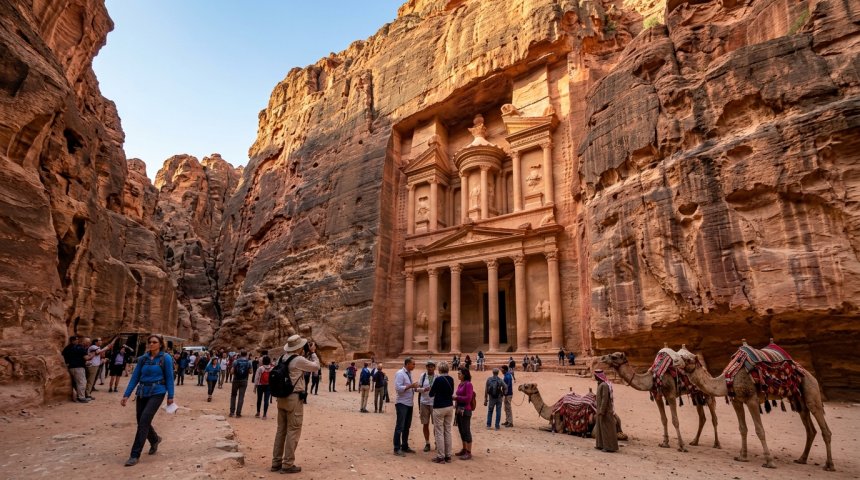
Imagine a city carved directly into towering sandstone cliffs, painted in hues of rose, orange, and gold by the setting sun. This isn't a fantasy; it's Petra, Jordan, a UNESCO World Heritage site and one of the most breathtaking archaeological wonders on Earth. For centuries, this ancient Nabataean capital lay hidden from the Western world, a lost city whispered about in legends. Today, it stands as a testament to human ingenuity, artistry, and resilience, drawing millions of visitors each year to explore its magnificent structures and unravel its rich history.
Did you know that the iconic Treasury (Al-Khazneh) in Petra was once believed to hold a pharaoh's treasure, leading to its name? This belief, though ultimately unfounded, speaks to the awe and mystery that has surrounded Petra for millennia. The city's true purpose was far more practical: a thriving hub for trade, a sophisticated water management system, and a vibrant cultural center for the Nabataeans, an industrious Arab people who mastered the desert environment.
This comprehensive guide will delve deep into the heart of Petra, exploring its fascinating history, architectural marvels, the ingenious Nabataeans who built it, and practical tips for planning your visit to this unforgettable destination in 2026. Prepare to be transported back in time to a city that truly embodies the phrase "half as old as time."
The Genesis of a Rose-Red Wonder: Nabataean Ingenuity
The story of Petra is inextricably linked to the Nabataeans, an ancient Arab nomadic tribe who settled in the region of southern Jordan around the 4th century BCE. They were not merely desert dwellers; they were astute traders, skilled engineers, and artistic visionaries. Their mastery of the arid landscape, particularly their ability to harness and manage precious water resources, was the foundation upon which Petra was built and flourished.
Who Were the Nabataeans?
The Nabataeans were originally nomadic traders who controlled the lucrative incense and spice routes that crisscrossed the Arabian Peninsula. Their wealth grew exponentially as they facilitated the movement of goods like frankincense, myrrh, and spices from Arabia, India, and beyond, to markets in the Mediterranean. Their strategic location, nestled within the rugged mountains of Jordan, provided natural defenses and access to vital trade routes.
Their language was Aramaic, and their script evolved from Aramaic. Over time, they developed their own distinct culture, blending influences from the civilizations they interacted with, including the Greeks, Romans, Egyptians, and Mesopotamians. This cultural fusion is vividly reflected in the architecture of Petra.
Masters of Water in the Desert
Perhaps the most remarkable achievement of the Nabataeans in Petra was their sophisticated water management system. In a region that receives very little rainfall, they engineered an intricate network of dams, cisterns, channels, and pipes to capture, store, and distribute water. This system not only sustained the city's population but also allowed for lush gardens and agriculture in the desert, a feat that astounded ancient visitors.
- Dams: They constructed dams across wadis (riverbeds) to control flash floods and divert water.
- Channels and Aqueducts: Carved into rock, these channels directed water from springs and rainwater collection points into the city.
- Cisterns: Numerous rock-cut cisterns, some large enough to hold thousands of cubic meters of water, were vital for storing water for use during dry periods.
- Pipes: Ceramic pipes were used to transport water to various parts of the city, including public fountains and private residences.
This mastery of hydraulics was crucial for Petra's survival and prosperity. It allowed them to create an oasis in the desert, supporting a population estimated to have reached up to 20,000-30,000 people at its peak. The engineering prowess demonstrated in these water systems is a significant reason why Petra remains a subject of fascination and study.
The Rise and Fall of a Desert Capital
Petra became the capital of the Nabataean Kingdom around the 1st century BCE. Its strategic location, combined with its impressive infrastructure and sophisticated society, made it a major economic and cultural center. The Nabataeans were known for their skilled craftsmanship, particularly in stone carving, which is evident in the monumental facades they chiseled directly into the sandstone cliffs.
The city reached its zenith in the 1st century CE. However, its fortunes began to change with the rise of Roman power. In 106 CE, the Roman Empire annexed the Nabataean Kingdom, incorporating it into the Roman province of Arabia Petraea. While Petra continued to thrive for a time under Roman rule, its importance as a trade hub gradually declined as maritime trade routes gained prominence.
A devastating earthquake in 363 CE caused significant damage to the city, accelerating its decline. By the Byzantine era, Petra was still inhabited, as evidenced by the presence of churches, but it had lost much of its former glory. After the Islamic conquests in the 7th century, Petra faded further into obscurity, known only to local Bedouin tribes. It remained largely forgotten by the outside world until its "rediscovery" by Swiss explorer Johann Ludwig Burckhardt in 1812.
Architectural Marvels Carved in Stone
Petra is renowned for its unique architecture, a stunning blend of Nabataean traditions and Hellenistic, Roman, and Egyptian influences. The most striking feature is that many of its most impressive structures are not built, but carved directly into the vibrant sandstone cliffs. This method of rock-cut architecture is what gives Petra its distinctive and awe-inspiring appearance.
The Siq: A Dramatic Entrance
The journey into Petra begins with the Siq, a narrow, winding gorge that stretches for about 1.2 kilometers (0.75 miles). Towering cliffs, reaching up to 80 meters (260 feet) high, press in on either side, creating a sense of anticipation and wonder. The Siq is not just a natural formation; it was also a crucial part of the Nabataeans' water management system, with channels carved along its sides. Walking through the Siq, with its changing light and dramatic rock formations, is an experience in itself, building up to the first breathtaking glimpse of the Treasury.

Al-Khazneh (The Treasury): The Iconic Facade
Emerging from the Siq, visitors are met with the unforgettable sight of Al-Khazneh, or The Treasury. This is arguably Petra's most famous monument, a breathtaking facade nearly 40 meters (130 feet) high, intricately carved into the rose-red sandstone. Despite its name, The Treasury was likely a royal tomb or temple, possibly for King Aretas IV in the 1st century CE.
The facade exhibits a sophisticated blend of Nabataean and Hellenistic architectural styles. Its columns, friezes, and sculptures, including figures of mythological beings and Nabataean deities, are remarkably preserved. The name "Treasury" comes from a Bedouin legend that pirates or an Egyptian pharaoh hid their treasure in the urn at the top of the facade, hence the bullet marks from those who tried to shoot it open. The sheer artistry and scale of The Treasury are a testament to the Nabataeans' architectural prowess.
The Street of Facades and the Theater
Beyond The Treasury, the valley opens up into a wider area revealing the Street of Facades. This is a row of monumental Nabataean tombs, each with its own distinct carved facade, showcasing a variety of architectural styles. These tombs, though less ornate than The Treasury, still convey the wealth and status of the individuals for whom they were built.
Further along, one encounters the impressive Nabataean Theater. Carved into the mountainside, this theater could seat an estimated 3,000 to 8,500 spectators. It's a remarkable example of how the Nabataeans adapted Roman architectural forms to their own needs and integrated them seamlessly into the natural landscape. The theater provides stunning views of the surrounding tombs and cliffs.
The Royal Tombs: Monuments to Power
Dominating the eastern cliff face are the Royal Tombs. These magnificent structures, including the Urn Tomb, Silk Tomb, Corinthian Tomb, and Palace Tomb, are some of the largest and most elaborate in Petra. Their grand scale and intricate carvings reflect the power and wealth of the Nabataean royalty.
- The Urn Tomb: Distinguished by its large urn above the entrance, this tomb was later converted into a church during the Byzantine period.
- The Silk Tomb: Named for the stunning swirls of color in the sandstone, its facade is simpler but equally impressive.
- The Corinthian Tomb: Resembles The Treasury in its Hellenistic influence but is more weathered.
- The Palace Tomb: A vast, multi-storied facade that evokes the grandeur of a Roman palace.
These tombs offer a glimpse into the Nabataeans' funerary practices and their sophisticated understanding of architecture and design.
The Monastery (Ad-Deir): A Remote Masterpiece
For those willing to undertake a strenuous climb, the Monastery (Ad-Deir) offers a reward that rivals even The Treasury. Located high in the hills, about an hour's hike from the main city area, Ad-Deir is even larger than The Treasury, measuring approximately 47 meters (154 feet) wide and 48 meters (157 feet) high. Its design shares similarities with The Treasury but is grander and less ornate, suggesting it may have served a religious or ceremonial purpose.
The climb to Ad-Deir is challenging, involving hundreds of steps carved into the rock, but the panoramic views from the top and the sheer magnificence of the monument make the effort more than worthwhile. It is a truly awe-inspiring structure, a testament to the Nabataeans' ambition and skill in carving monumental architecture into the most challenging terrains.
Other Significant Structures
Petra is vast, and beyond these iconic landmarks lie countless other fascinating sites:
- The Great Temple: A massive complex believed to have been a significant public building, featuring colonnaded streets and impressive architectural elements.
- Qasr al-Bint: One of the few freestanding structures in Petra, this well-preserved temple was a major Nabataean place of worship.
- The Colonnaded Street: The main thoroughfare of Roman Petra, lined with the remains of columns, shops, and public buildings.
- High Place of Sacrifice: An ancient altar site offering spectacular views over the city, accessible via a steep climb.
Exploring Petra is like stepping into a living museum, where every corner reveals another layer of history and architectural brilliance.
The Nabataeans: Architects of the Desert Oasis
The Nabataeans were more than just builders; they were a civilization that thrived by understanding and mastering their environment. Their success in Petra was a direct result of their ingenuity, their entrepreneurial spirit, and their ability to adapt.
Trade and Economy
As mentioned earlier, the Nabataeans were central figures in the ancient trade networks. Petra's location was ideal, situated at the crossroads of major caravan routes connecting Egypt, Syria, Arabia, and the Mediterranean. They levied taxes and provided protection for merchants passing through their territory, amassing considerable wealth.
The goods traded included:
- Incense and Myrrh: Highly prized commodities from southern Arabia used in religious ceremonies and perfumes.
- Spices: From India and the East, used for culinary and medicinal purposes.
- Gums and Resins: Essential for various industries.
- Precious Metals and Textiles: Traded from across the known world.
The Nabataeans controlled these routes for centuries, making Petra a vibrant and prosperous cosmopolitan city. Their economic acumen allowed them to invest in the monumental construction projects that define Petra today.
Religion and Beliefs
The Nabataeans worshipped a pantheon of gods and goddesses, with Dushara (the principal male deity, associated with mountains and storms) and Al-Uzza (a prominent female deity, associated with fertility and the morning star) being among the most important. Their religious practices often involved sacrifices, and many of the carved monuments likely served religious or funerary purposes.
Evidence of their religious practices can be seen in the numerous altars, temples, and high places of sacrifice found throughout Petra and its surrounding areas. The elaborate tombs themselves reflect a strong belief in the afterlife and a desire to honor their deceased rulers and elites.
Daily Life and Society
While much of what we know about the Nabataeans comes from their monumental architecture and inscriptions, archaeological findings provide insights into their daily lives. They lived in a complex society with a sophisticated social structure. Evidence suggests a significant population of artisans, merchants, farmers, and laborers, all contributing to the city's functioning.
Their diet likely consisted of grains, fruits, vegetables, and meat, supplemented by the water resources they so expertly managed. They wore distinctive clothing, and their artistic expressions, visible in pottery, metalwork, and tomb decorations, reveal a rich cultural life.
The Nabataeans were not just a transient group; they established a lasting kingdom and a civilization that left an indelible mark on history. Their ability to thrive in a challenging desert environment and create a city of such enduring beauty and complexity is a remarkable achievement.
Visiting Petra in 2026: Practical Tips for an Unforgettable Journey
Planning a trip to Petra requires some preparation to make the most of your visit to this vast archaeological park. As one of the New7Wonders of the World, it attracts visitors from across the globe, so understanding the logistics is key.
Getting to Petra
Petra is located in southern Jordan, near the town of Wadi Musa.
- By Air: The nearest international airport is Queen Alia International Airport (AMM) near Amman, the capital of Jordan. From Amman, you can reach Wadi Musa by:
- Rental Car: Approximately a 3-hour drive south via the Desert Highway or the scenic King's Highway.
- JETT Bus: Comfortable and reliable bus services run daily between Amman and Petra.
- Taxi/Private Transfer: More expensive but offers convenience.
- From Aqaba: If you are arriving from Aqaba on the Red Sea coast, Petra is about a 2-hour drive north.
When to Visit
The best times to visit Petra are during the spring (March to May) and autumn (September to November). During these months, the weather is pleasant, with warm days and cool evenings, ideal for exploring the extensive site.
- Spring: Wildflowers bloom, adding a touch of color to the desert landscape.
- Autumn: The weather remains consistently good for outdoor activities.
Summer (June to August) can be extremely hot, with temperatures often exceeding 40°C (104°F), making daytime exploration challenging. Winter (December to February) is milder but can bring rain and cooler temperatures, though it offers fewer crowds.
Tickets and Opening Hours
Petra is managed by the Jordan Tourism Board. You will need to purchase a ticket to enter the site.
- Jordan Pass: If you are planning to visit multiple sites in Jordan and stay for at least three nights, the Jordan Pass is highly recommended. It includes the visa fee for most nationalities and entry to over 40 attractions, including Petra (for one, two, or three consecutive days). This is often the most cost-effective option.
- Single Entry Tickets: Available at the Petra Visitor Centre if you don't opt for the Jordan Pass. Prices vary depending on the number of days you wish to spend in Petra.
Opening Hours: Petra typically opens early in the morning (around 6:00 AM) and closes in the late afternoon or early evening, depending on the season. It is advisable to check the official opening hours closer to your visit.
Exploring the Site
Petra is a vast archaeological park, covering about 264 square kilometers (102 square miles), although the main tourist area is more concentrated.
- Wear Comfortable Shoes: You will be doing a lot of walking, often on uneven terrain. Sturdy walking shoes or hiking boots are essential.
- Stay Hydrated: Carry plenty of water, especially during warmer months. There are vendors within the site, but prices can be higher.
- Sun Protection: Bring sunscreen, a hat, and sunglasses. The sun can be intense, and shade can be limited in certain areas.
- Pace Yourself: Don't try to see everything in one day, especially if you have a one-day ticket. Prioritize the main attractions like The Siq, The Treasury, The Monastery, and The Royal Tombs. A two-day or three-day pass allows for a more relaxed and in-depth exploration.
- Consider a Guide: Hiring a licensed guide at the Visitor Centre can greatly enhance your understanding of Petra's history, culture, and archaeology.
- Getting Around: While most of Petra is explored on foot, you can hire donkeys, camels, or horse-drawn carriages for certain sections, particularly for the climb to the Monastery or for those with mobility issues. Be prepared to negotiate prices and be aware of animal welfare concerns.
Petra by Night
A magical experience offered on select evenings (usually Monday, Wednesday, and Thursday) is Petra by Night. The path through the Siq and the area in front of The Treasury are illuminated by thousands of candles, creating an ethereal atmosphere. A Bedouin guide shares stories, accompanied by traditional music. It's a unique way to experience the grandeur of The Treasury in a different light.
Respecting the Site
Petra is a precious historical and cultural heritage site. Visitors are urged to:
- Do Not Touch or Climb: Avoid touching the ancient carvings and structures, and refrain from climbing on fragile ruins.
- Do Not Litter: Take all your trash with you.
- Respect Local Culture: Dress modestly, especially when visiting religious sites or interacting with local communities.
A visit to Petra is more than just sightseeing; it's an immersion into history, a journey through a landscape of unparalleled beauty, and an encounter with the enduring legacy of the Nabataeans.
The Enduring Legacy of Petra
Petra is more than just a collection of ancient ruins; it is a testament to human resilience, ingenuity, and the profound connection between a civilization and its environment. The Nabataeans, through their visionary engineering and artistic mastery, transformed a harsh desert landscape into a thriving metropolis and a work of art that continues to inspire awe centuries later.
The "Rose-Red City," as it is famously known, owes its color to the unique sandstone formations that make up its cliffs, a palette that shifts dramatically with the changing light of day. From the dramatic entrance through the narrow Siq to the breathtaking facades of The Treasury and The Monastery, Petra unfolds like a story etched in stone. Its sophisticated water management systems, crucial for survival in an arid climate, highlight the Nabataeans' deep understanding of their surroundings and their ability to innovate.
The city's strategic location made it a vital hub for ancient trade routes, fostering a rich cultural exchange that is reflected in its eclectic architecture. While earthquakes and shifting trade patterns eventually led to its decline, the enduring structures left behind speak volumes about the Nabataeans' power, wealth, and artistic vision.
The rediscovery of Petra in the early 19th century by Johann Ludwig Burckhardt opened this hidden wonder to the world, and its designation as a UNESCO World Heritage site solidified its global importance. Today, Petra remains a beacon of Jordan's rich history and a major draw for travelers seeking adventure, culture, and a glimpse into a remarkable past.
As we continue to explore and learn from Petra, its legacy endures not just in the magnificent carvings and structures, but in the lessons it offers about sustainable living, cultural adaptation, and the enduring power of human creativity. It is a place that truly lives up to its ancient reputation, a city carved from dreams and time itself, waiting to be discovered by each new generation.
Frequently Asked Questions about Petra
How long does it take to see Petra?
To truly appreciate Petra, it's recommended to allocate at least two full days for your visit. One day allows you to see the main highlights like the Siq, The Treasury, the Street of Facades, the Theater, and the Royal Tombs. However, to explore further afield, such as hiking to the Monastery (Ad-Deir) and the High Place of Sacrifice, or to simply soak in the atmosphere without rushing, a second day is highly beneficial. Many visitors opt for a two-day or even three-day pass to fully immerse themselves in the site's grandeur and explore its many less-visited corners.
What is the best time of year to visit Petra?
The most comfortable times to visit Petra are during the spring (March to May) and autumn (September to November). During these periods, the weather is generally pleasant, with warm daytime temperatures ideal for extensive walking and exploring, and cooler evenings. Summer (June to August) can be extremely hot, with temperatures frequently exceeding 40°C (104°F), making daytime exploration challenging. Winter (December to February) is milder but can be rainy and cooler, though it typically sees fewer crowds.
What should I wear when visiting Petra?
Comfortable and sturdy walking shoes or hiking boots are essential, as you will be doing a significant amount of walking on uneven terrain. Lightweight, breathable clothing is recommended, especially for warmer months. It's advisable to wear layers, as temperatures can fluctuate throughout the day. Sun protection, including sunscreen, a wide-brimmed hat, and sunglasses, is crucial due to the intense sun. Modest dress is also appreciated, out of respect for local culture, particularly when interacting with Bedouin communities or visiting any religious sites within the park.
Is Petra suitable for people with mobility issues?
Exploring Petra can be challenging for individuals with significant mobility issues. The main path from the Visitor Centre through the Siq to the Treasury is relatively flat, though uneven in places. However, many of Petra's most impressive sites, including the Monastery and the High Place of Sacrifice, require strenuous climbs involving hundreds of steps carved into the rock. While donkeys and camels can be hired for transport along certain routes, their use is not always suitable for everyone, and accessibility to all areas is limited. It's advisable to contact the Petra Development and Tourism Region Authority (PDTRA) or a tour operator in advance to discuss specific needs and available options.
What is "Petra by Night"?
Petra by Night is a special evening event that offers a unique and magical experience of the ancient city. On select nights (typically Monday, Wednesday, and Thursday), the path leading through the Siq and the area in front of The Treasury are illuminated by thousands of candles. Visitors walk through the candlelit Siq to reach The Treasury, where they can enjoy traditional Bedouin music and storytelling. It's a different perspective on the iconic facade, bathed in an ethereal glow, and provides a memorable introduction or farewell to Petra. Tickets for Petra by Night are separate from the daytime entry tickets.
What are the main attractions within Petra?
The main attractions within Petra include:
- The Siq: The dramatic, narrow gorge that serves as the main entrance.
- Al-Khazneh (The Treasury): The iconic, intricately carved facade that greets visitors at the end of the Siq.
- The Street of Facades: A row of impressive Nabataean tombs carved into the cliff face.
- The Nabataean Theater: A large theater carved directly into the mountainside.
- The Royal Tombs: A series of grand tomb facades, including the Urn Tomb, Silk Tomb, Corinthian Tomb, and Palace Tomb.
- The Colonnaded Street: The main thoroughfare of Roman Petra.
- Ad-Deir (The Monastery): A massive, impressive facade located high in the hills, requiring a significant hike.
- The High Place of Sacrifice: An ancient altar site offering panoramic views.
These are just some of the highlights; the entire site is filled with countless other tombs, temples, dwellings, and water channels waiting to be discovered.
Share
What's Your Reaction?
 Like
0
Like
0
 Dislike
0
Dislike
0
 Love
0
Love
0
 Funny
0
Funny
0
 Angry
0
Angry
0
 Sad
0
Sad
0
 Wow
0
Wow
0