
Ultimate The Evolving Landscape: Remote Work Tech & Cybersecurity 2026
Explore the evolving landscape: remote work tech and cybersecurity solutions in 2026. Secure your workforce with advanced tools and strategies.

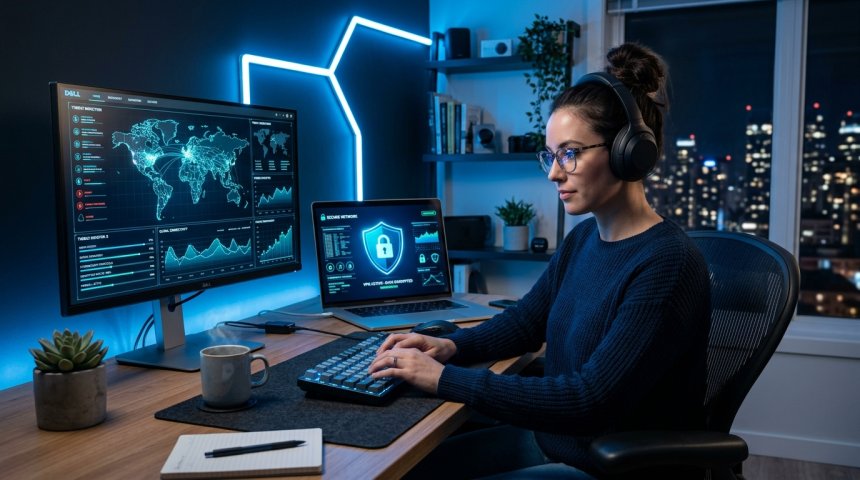
The year 2026 finds us deeply entrenched in a work paradigm that would have seemed futuristic just a decade ago. Remote work, once a niche offering, is now a cornerstone of modern business operations. This shift, accelerated by global events and embraced for its flexibility and potential cost savings, has fundamentally altered how we collaborate and conduct our daily professional lives. However, this digital transformation, while offering immense benefits, also presents a complex and ever-growing challenge: cybersecurity. The distributed nature of remote work, with employees accessing sensitive data from a multitude of personal and public networks, creates a vastly expanded attack surface for malicious actors. Ensuring robust remote work technology and implementing comprehensive cybersecurity solutions are no longer optional extras; they are critical imperatives for business continuity and survival in 2026.
The sheer scale of remote work is staggering. A recent 2026 survey by the Global Workforce Institute indicated that over 60% of the global workforce now engages in some form of remote or hybrid work, with a significant portion operating entirely outside traditional office spaces. This massive decentralization of the workforce means that company data, intellectual property, and client information are no longer confined within the protective walls of a corporate network. Instead, they traverse home Wi-Fi networks, public hotspots, and a diverse array of personal devices. This shift necessitates a proactive and layered approach to cybersecurity, one that extends far beyond the perimeter defenses of yesteryear.
Understanding the technological underpinnings of remote work is the first step toward fortifying its security. From the communication tools that keep teams connected to the cloud infrastructure that hosts our data, every piece of remote work technology plays a role. Each innovation, while enhancing productivity, also introduces potential vulnerabilities if not managed with security as a primary consideration. This article will delve into the critical technologies enabling remote work and explore the essential cybersecurity solutions required to protect them, ensuring that businesses can harness the power of a distributed workforce without succumbing to digital threats.
The Technological Backbone of Remote Work
The success of widespread remote work in 2026 hinges on a sophisticated ecosystem of technologies designed to facilitate seamless collaboration, communication, and access to resources, regardless of physical location. These tools have evolved rapidly, becoming more intuitive, integrated, and powerful, but their proliferation also demands careful consideration of their security implications.
Communication and Collaboration Platforms
At the heart of any remote work setup are the platforms that enable real-time interaction and project management. Tools like Slack, Microsoft Teams, and Zoom have become indispensable. These platforms offer features such as instant messaging, video conferencing, file sharing, and persistent chat channels.
- Instant Messaging and Chat: These tools allow for quick, informal communication, reducing email overload. However, they can also be vectors for phishing attempts or the spread of malware if malicious links or files are shared.
- Video Conferencing: Platforms like Zoom, Google Meet, and Cisco Webex are crucial for virtual meetings, presentations, and team stand-ups. Security concerns here include unauthorized access to meetings, screen sharing vulnerabilities, and the potential for eavesdropping. End-to-end encryption is becoming a standard expectation for sensitive discussions.
- Project Management and Document Sharing: Tools such as Asana, Trello, Monday.com, and cloud storage solutions like Google Drive, Dropbox, and OneDrive are vital for organizing tasks and collaboratively working on documents. Secure access controls, version history, and granular permissions are paramount to prevent unauthorized data modification or access.
The widespread adoption of these platforms means that sensitive business conversations and proprietary documents are constantly being transmitted and stored digitally. This necessitates strong authentication methods for accessing these platforms and robust data encryption both in transit and at rest.
Cloud Computing and Infrastructure
The cloud is the engine that powers much of modern remote work. Services ranging from Software as a Service (SaaS) applications to Infrastructure as a Service (IaaS) and Platform as a Service (PaaS) allow businesses to scale their operations without significant on-premises investment.
- SaaS Applications: Most of the collaboration tools mentioned above are SaaS applications. Other examples include customer relationship management (CRM) systems, accounting software, and human resources platforms. Organizations rely on cloud providers to secure the underlying infrastructure, but they retain responsibility for user access management and data configuration.
- IaaS and PaaS: For businesses with more complex IT needs, IaaS (e.g., Amazon Web Services, Microsoft Azure, Google Cloud Platform) provides virtualized computing resources, while PaaS offers a platform for developing and deploying applications. While these providers offer robust security features, misconfigurations by the end-user organization are a common source of breaches.
- Virtual Desktop Infrastructure (VDI) and Desktop as a Service (DaaS): VDI and DaaS solutions allow employees to access a virtualized desktop environment hosted in the cloud. This can enhance security by centralizing data and applications, making it easier to manage security policies and updates. However, securing the endpoints that connect to these virtual desktops remains crucial.
The reliance on cloud services means that businesses must carefully vet their cloud providers' security certifications and compliance standards. Furthermore, implementing strong identity and access management (IAM) within the cloud environment is critical to controlling who can access what resources.
Virtual Private Networks (VPNs)
VPNs have long been a staple of remote work security, creating an encrypted tunnel between an employee's device and the company network. This encrypts all data traffic, making it unreadable to anyone intercepting it, especially on public Wi-Fi.
- Traditional VPNs: These have been effective but can sometimes be bandwidth-intensive and create a bottleneck as all traffic is routed through a central point.
- Zero Trust Network Access (ZTNA): Emerging as a more advanced alternative, ZTNA operates on the principle of "never trust, always verify." Instead of granting broad network access, ZTNA provides secure, context-aware access to specific applications based on user identity, device posture, and other contextual factors. This micro-segmentation significantly reduces the attack surface.
The choice and implementation of VPN or ZTNA solutions are critical for securing remote access to internal company resources.
Endpoint Devices and Management
The devices employees use – laptops, smartphones, tablets – are the gateways to company data. In a remote work setting, these endpoints are often outside the direct control of the IT department, increasing vulnerability.
- Company-Issued vs. Personal Devices (BYOD): While company-issued devices offer more control over security configurations, the Bring Your Own Device (BYOD) model, driven by employee preference and cost savings, presents unique challenges. Policies and technologies are needed to ensure that personal devices accessing corporate data meet minimum security standards.
- Mobile Device Management (MDM) and Unified Endpoint Management (UEM): MDM and UEM solutions allow IT departments to enforce security policies, manage applications, track devices, and remotely wipe corporate data from lost or stolen devices, regardless of whether they are company-issued or personal.
Securing endpoints involves not just the hardware but also the operating systems and applications running on them, requiring regular patching and updates.
Cybersecurity Threats in the Remote Work Era
The distributed nature of remote work has created fertile ground for a variety of cyber threats. Attackers are increasingly sophisticated, exploiting human psychology and technological vulnerabilities to gain unauthorized access to sensitive information.

Phishing and Social Engineering
Phishing remains one of the most prevalent and effective attack vectors. Attackers impersonate trusted entities (e.g., IT departments, colleagues, service providers) via email, text messages (smishing), or voice calls (vishing) to trick individuals into revealing sensitive information like login credentials or clicking on malicious links.
- Spear Phishing: This is a targeted form of phishing, where attackers research their victims to craft highly personalized and convincing messages, increasing the likelihood of success.
- Business Email Compromise (BEC): BEC attacks often involve spoofing a company executive's email address to trick employees into transferring funds or divulging confidential information.
The anonymity and ease of communication offered by remote work tools can inadvertently facilitate these attacks. Employees working in isolation may feel less inclined to verify requests, especially if they appear to come from a familiar source.
Malware and Ransomware
Malware, including viruses, worms, spyware, and trojans, can infect devices through malicious downloads, email attachments, or compromised websites. Ransomware, a particularly damaging type of malware, encrypts a victim's files and demands a ransom payment for their decryption.
- Ransomware Evolution: In 2026, ransomware attacks are often more sophisticated, involving data exfiltration (double extortion) before encryption, threatening to leak stolen data if the ransom isn't paid. This adds immense pressure on organizations to comply.
- Infection Vectors: Remote workers are susceptible when using unsecured public Wi-Fi, downloading software from untrusted sources, or clicking on malicious links. Outdated operating systems and software on their devices are also prime targets.
The impact of a ransomware attack can be devastating, leading to significant financial losses, operational downtime, and reputational damage.
Weak Authentication and Credential Theft
Inadequate authentication mechanisms are a major cybersecurity weakness. Using weak, reused, or easily guessable passwords allows attackers to gain access to accounts. Credential stuffing attacks, where attackers use lists of stolen credentials from previous breaches to try and log into other services, are rampant.
- The Human Factor: Employees might reuse passwords for convenience or write them down, making them vulnerable to discovery.
- Compromised Accounts: Once an attacker gains access to one account, they may use it to pivot and gain access to other systems or impersonate the user to launch further attacks.
Insider Threats
While often associated with external attackers, cybersecurity threats can also originate from within an organization. This can be malicious (an employee intentionally causing harm) or accidental (an employee unintentionally making a mistake that compromises security).
- Malicious Insiders: Disgruntled employees or those seeking financial gain might intentionally steal data, sabotage systems, or provide access to external attackers.
- Accidental Insiders: Employees might unintentionally share sensitive information, fall victim to phishing scams, or misconfigure security settings, inadvertently creating vulnerabilities.
The distributed nature of remote work can sometimes make it harder for organizations to monitor employee activity and detect suspicious behavior.
Unsecured Networks and Devices
Employees connecting to the internet from home or public Wi-Fi networks can expose company data to interception. Home routers often have default passwords or unpatched vulnerabilities, and public Wi-Fi networks are notoriously insecure, making them ideal hunting grounds for attackers.
- Man-in-the-Middle (MitM) Attacks: On unsecured networks, attackers can position themselves between the user and the internet, intercepting and potentially altering communications.
- IoT Vulnerabilities: The proliferation of connected devices (Internet of Things) in homes, such as smart speakers or security cameras, can also introduce vulnerabilities if not properly secured.
Essential Cybersecurity Solutions for Remote Work
Addressing the multifaceted threats posed by remote work requires a comprehensive and layered cybersecurity strategy. This involves a combination of technological solutions, robust policies, and ongoing employee education.
Identity and Access Management (IAM)
Strong IAM is the foundation of remote work security. It ensures that only authorized individuals can access specific resources and that their access is appropriate for their role.
- Multi-Factor Authentication (MFA): MFA requires users to provide two or more verification factors to gain access to a resource. This could include something the user knows (password), something the user has (a security token or smartphone), or something the user is (biometrics like a fingerprint). MFA is one of the most effective ways to prevent unauthorized access due to compromised credentials.
- Single Sign-On (SSO): SSO allows users to log in once with a single set of credentials to access multiple applications. When combined with MFA, SSO simplifies the user experience while enhancing security by centralizing authentication management.
- Principle of Least Privilege: Users should only be granted the minimum level of access necessary to perform their job functions. This limits the potential damage if an account is compromised.
- Regular Access Reviews: Periodically reviewing user access rights ensures that permissions remain appropriate and that access is revoked promptly when an employee changes roles or leaves the organization.
Endpoint Security and Device Management
Securing the devices that employees use to access company resources is paramount.
- Endpoint Detection and Response (EDR) / Extended Detection and Response (XDR): EDR solutions go beyond traditional antivirus by continuously monitoring endpoints for malicious activity, providing advanced threat detection, investigation, and automated response capabilities. XDR extends this visibility and response across multiple security layers, including endpoints, networks, cloud, and email.
- Mobile Device Management (MDM) / Unified Endpoint Management (UEM): As mentioned earlier, MDM/UEM solutions are crucial for enforcing security policies, managing applications, and protecting data on both company-owned and personal devices used for work. This includes remote wiping capabilities, encryption enforcement, and compliance checks.
- Patch Management: Regularly updating operating systems, applications, and firmware is critical to closing security vulnerabilities that attackers exploit. Automated patch management systems are essential for remote environments.
- Disk Encryption: Encrypting the hard drives of laptops and mobile devices ensures that data remains unreadable even if the device is lost or stolen.
Network Security
While the traditional network perimeter has dissolved, securing the pathways to and from remote workers remains vital.
- Virtual Private Networks (VPNs) and Zero Trust Network Access (ZTNA): As discussed, VPNs create secure tunnels. ZTNA offers a more granular and modern approach by granting access based on identity and context, significantly reducing the attack surface compared to traditional VPNs that provide broad network access.
- Secure Web Gateways (SWGs): SWGs act as a secure proxy for web traffic, inspecting data for malware, enforcing acceptable use policies, and preventing access to malicious websites.
- Network Segmentation: Even within cloud environments or internal networks, segmenting access can limit the lateral movement of attackers if one part of the system is compromised.
Data Security and Privacy
Protecting sensitive data, regardless of where it resides, is a core cybersecurity objective.
- Data Loss Prevention (DLP): DLP solutions monitor and control data in use, in motion, and at rest to prevent sensitive information from leaving the organization's control. This can include blocking emails with sensitive content, preventing uploads to unauthorized cloud storage, or encrypting files.
- Encryption: Encrypting sensitive data both in transit (e.g., via TLS/SSL) and at rest (e.g., database encryption, file encryption) ensures it remains confidential even if accessed without authorization.
- Cloud Access Security Brokers (CASBs): CASBs provide visibility and control over cloud applications and data, enforcing security policies, detecting threats, and ensuring compliance across various cloud services.
- Regular Backups: Maintaining regular, secure, and tested backups of all critical data is essential for recovery from ransomware attacks or accidental data loss. Backups should be stored offline or in a separate, secured environment.
Security Awareness Training and Education
Technology alone cannot solve all cybersecurity challenges. Human behavior is often the weakest link, making comprehensive and ongoing security awareness training indispensable.
- Phishing Simulations: Regularly conducting simulated phishing attacks helps employees learn to identify and report real phishing attempts.
- Training on Secure Practices: Educating employees on topics such as strong password hygiene, recognizing social engineering tactics, secure Wi-Fi usage, and the importance of software updates is crucial.
- Incident Reporting Procedures: Employees must understand how and when to report suspicious activities or potential security incidents without fear of reprisal. A clear, accessible reporting channel is vital.
- Policy Reinforcement: Training should consistently reinforce company security policies related to remote work, data handling, and device usage.
Incident Response Planning
Despite best efforts, security incidents can and do occur. A well-defined and practiced incident response plan is critical for minimizing damage and ensuring a swift recovery.
- Pre-Defined Roles and Responsibilities: Clearly outlining who is responsible for what during an incident.
- Communication Protocols: Establishing clear communication channels for internal teams, external stakeholders, and potentially affected customers.
- Containment and Eradication Procedures: Steps to isolate affected systems and remove the threat.
- Recovery and Post-Incident Analysis: Procedures for restoring systems, assessing the damage, and implementing lessons learned to improve future defenses.
The Future of Remote Work Security
As remote and hybrid work models continue to evolve in 2026 and beyond, so too will the cybersecurity challenges and solutions. Several key trends are shaping the future landscape:
AI and Machine Learning in Cybersecurity
Artificial intelligence (AI) and machine learning (ML) are increasingly being integrated into cybersecurity solutions. These technologies can analyze vast amounts of data to detect anomalies, predict threats, and automate responses far faster than human analysts.
- Threat Intelligence: AI/ML can process global threat data to identify emerging patterns and zero-day exploits.
- Behavioral Analysis: ML algorithms can establish baseline user and system behavior, flagging deviations that might indicate a compromise.
- Automated Response: AI can trigger automated actions, such as isolating an endpoint or blocking a malicious IP address, in near real-time.
Zero Trust Architecture (ZTA)
The Zero Trust model, which assumes no implicit trust for any user or device, is becoming the de facto standard for securing modern, distributed environments. Its granular approach to access control, continuous verification, and micro-segmentation offers a more robust defense against sophisticated threats than traditional perimeter-based security. As ZTA matures, its adoption will likely accelerate, fundamentally changing how network access is managed.
Enhanced Privacy Controls and Regulations
With the increased collection and processing of personal data in remote work scenarios, privacy concerns are at the forefront. Regulations like GDPR and CCPA continue to evolve, and new legislation focused on data protection in hybrid work environments is emerging. Businesses must prioritize privacy-by-design principles and ensure their remote work technology and cybersecurity solutions comply with these increasingly stringent regulations. This includes robust data anonymization, consent management, and transparent data handling practices.
The Human Element: Continuous Learning and Adaptability
While technology advances, the human element remains critical. The future of remote work security will depend on organizations fostering a culture of security consciousness and empowering employees with continuous learning opportunities. As threats evolve, so too must the awareness and skills of the workforce. Adaptability and a proactive mindset, rather than a reactive one, will be key to navigating the dynamic cybersecurity landscape.
Conclusion
The pervasive integration of remote work in 2026 has undeniably reshaped the professional world, offering unprecedented flexibility and efficiency. However, this transformation comes with a significant cybersecurity imperative. The expanded attack surface, the reliance on diverse technologies, and the inherent vulnerabilities of distributed workforces demand a proactive, multi-layered, and adaptable approach to security.
From robust Identity and Access Management and advanced Endpoint Security to secure Network Infrastructure and stringent Data Protection measures, a comprehensive suite of cybersecurity solutions is essential. These technological safeguards must be complemented by consistent and effective Security Awareness Training to empower employees as the first line of defense.
As we look ahead, the integration of AI and ML into cybersecurity, the widespread adoption of Zero Trust architectures, and an ever-increasing focus on data privacy will continue to define the evolution of remote work security. By embracing these advancements and fostering a strong security culture, organizations can confidently navigate the complexities of the modern workplace, harnessing the benefits of remote work while effectively mitigating its inherent risks. The commitment to robust remote work technology and vigilant cybersecurity solutions is not merely a technical requirement; it is a strategic necessity for resilience, trust, and sustained success in the digital age.
Frequently Asked Questions
What is the biggest cybersecurity risk for remote workers?
The biggest cybersecurity risk for remote workers is typically phishing and social engineering attacks. These attacks exploit human trust and can lead to credential theft, malware infections, or financial fraud. Because remote workers often operate with less direct supervision and may be more inclined to trust communications received digitally, they can be particularly vulnerable.
How can businesses ensure their remote employees are using secure Wi-Fi networks?
Businesses can encourage secure Wi-Fi usage by: 1. Providing VPNs: Mandating the use of a Virtual Private Network (VPN) for all remote access to company resources encrypts traffic, making it safer even on public Wi-Fi. 2. Educating Employees: Training employees on the risks of public Wi-Fi and advising them to avoid sensitive transactions or access to confidential data when not on a trusted network. 3. Implementing Network Access Control (NAC): For employees connecting to company resources, NAC solutions can verify the security posture of the network before granting access. 4. Recommending Secure Home Networks: Providing guidance on securing home Wi-Fi networks, such as changing default router passwords and enabling WPA3 encryption.
What is Zero Trust Network Access (ZTNA) and why is it important for remote work?
Zero Trust Network Access (ZTNA) is a security framework that operates on the principle of "never trust, always verify." Unlike traditional VPNs that grant broad network access once a user is authenticated, ZTNA provides granular, context-aware access to specific applications or resources based on verified user identity, device health, and other contextual factors. It's crucial for remote work because it significantly reduces the attack surface by segmenting access and ensuring that even if one component is compromised, the rest of the network remains protected. This model is more secure for distributed workforces where the traditional network perimeter is non-existent.
How often should security awareness training be conducted for remote employees?
Security awareness training for remote employees should not be a one-time event. It should be conducted regularly and continuously. This typically includes: * Initial onboarding training for new hires. * Annual or semi-annual comprehensive training sessions. * Regular, shorter updates (e.g., monthly or quarterly) on emerging threats and best practices. * Ongoing phishing simulations and immediate feedback. This continuous approach helps keep security top-of-mind and ensures employees are up-to-date on the latest threats and defense strategies.
What are the key components of an effective incident response plan for a remote workforce?
An effective incident response plan for a remote workforce should include: 1. Clear Roles and Responsibilities: Defining who is on the incident response team and their specific duties. 2. Communication Protocols: Establishing secure and reliable communication channels for the incident response team and for notifying stakeholders. 3. Incident Detection and Reporting: Clear procedures for employees to report suspicious activities and for IT to detect incidents across distributed systems. 4. Containment Strategies: Methods to isolate compromised devices or systems quickly to prevent further spread. 5. Eradication and Recovery Procedures: Steps to remove the threat and restore affected systems and data, including procedures for data backups. 6. Post-Incident Analysis: A process for reviewing the incident, identifying root causes, and updating security measures and response plans accordingly. 7. Legal and Regulatory Compliance: Understanding notification requirements for data breaches under relevant laws.
How does the use of personal devices (BYOD) impact cybersecurity for remote work?
The Bring Your Own Device (BYOD) model for remote work introduces significant cybersecurity challenges. While it offers flexibility and potential cost savings, it means that sensitive company data is accessed and potentially stored on devices that the company does not fully control. Key impacts include: * Inconsistent Security Standards: Personal devices may lack up-to-date security software, patches, or strong passwords. * Data Sprawl: Corporate data can become mixed with personal data, making it harder to track, manage, and protect. * Difficulty in Enforcement: Enforcing company security policies on personal devices can be challenging due to privacy concerns and varying device configurations. * Increased Risk of Malware: Personal devices may be used for activities that increase malware risk (e.g., downloading unverified apps, visiting risky websites). To mitigate these risks, organizations typically implement strict BYOD policies, Mobile Device Management (MDM) or Unified Endpoint Management (UEM) solutions, and mandate the use of VPNs and strong authentication for accessing company resources.
Share
What's Your Reaction?
 Like
0
Like
0
 Dislike
0
Dislike
0
 Love
0
Love
0
 Funny
0
Funny
0
 Angry
0
Angry
0
 Sad
0
Sad
0
 Wow
0
Wow
0